
What does it mean to design buildings for a world in crisis—but also full of possibility?
Enter Doughnut Economics, a powerful framework by economist Kate Raworth that challenges the old metrics of growth and replaces them with a compass for thriving—within planetary boundaries and with social justice at its core.
The doughnut’s inner ring defines a social foundation: the basic needs every human being deserves—like housing, education, income, health, and equity. The outer ring defines the ecological ceiling: nine critical planetary boundaries we must not exceed, from climate change to chemical pollution. Our goal? To design in the safe and just space between.
🌍 Architecture Meets the Doughnut
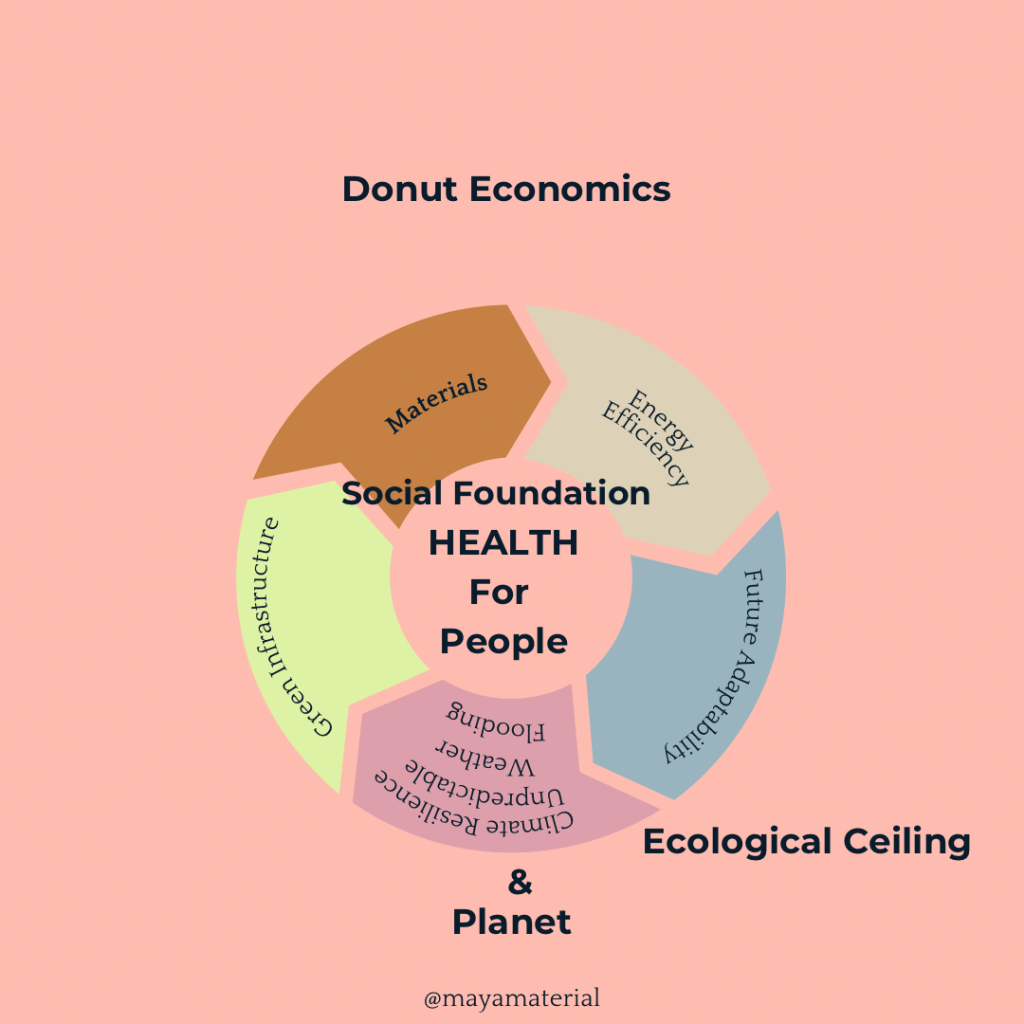
As architects, designers, and builders of culture and infrastructure, we hold immense power to shape that in-between space. Here’s how:
🟢 Designing for the Social Foundation
Architecture isn’t neutral. It either includes or excludes. Supports or suppresses.
Housing: Ensure housing is healthy, affordable, and adaptable across demographics. Health & Wellbeing: Prioritise daylight, indoor air quality, and non-toxic materials. Access & Equity: Design for digital access, gender safety, and cultural dignity. Political & Social Voice: Invite community participation into design processes.
We’re not just creating shelter—we’re shaping the systems people live within.
🚫 Designing Within the Ecological Ceiling
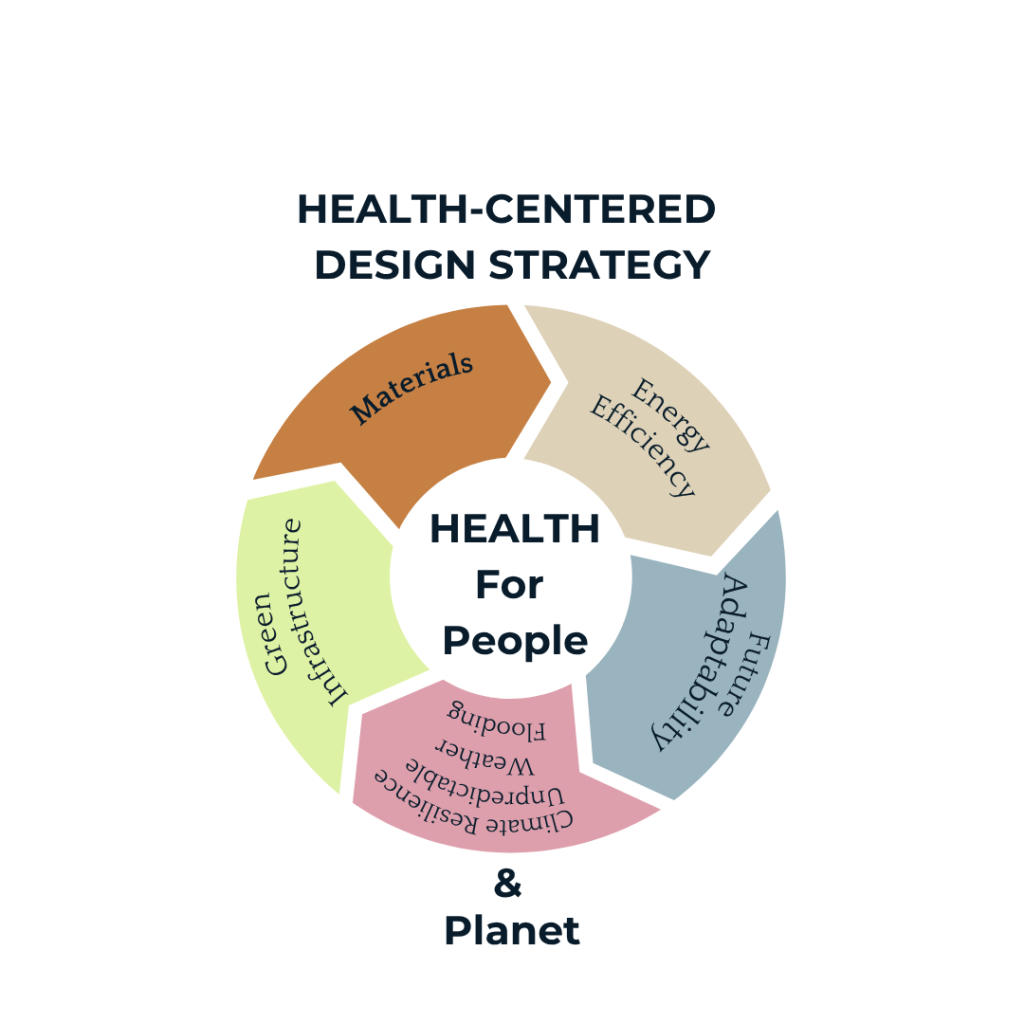
The built environment is a major driver of climate change and resource depletion. We must do better—starting with:
Embodied Carbon: Use local, renewable, and reclaimed materials to reduce emissions. Energy Use: Design for passive cooling and net-zero energy systems. Material Health: Avoid VOCs, forever chemicals, and toxic finishes. Water & Land: Capture rainwater, restore landscapes, and protect biodiversity.
Each decision is a line between extractive and regenerative practice.
🔄 Toward Regenerative Design
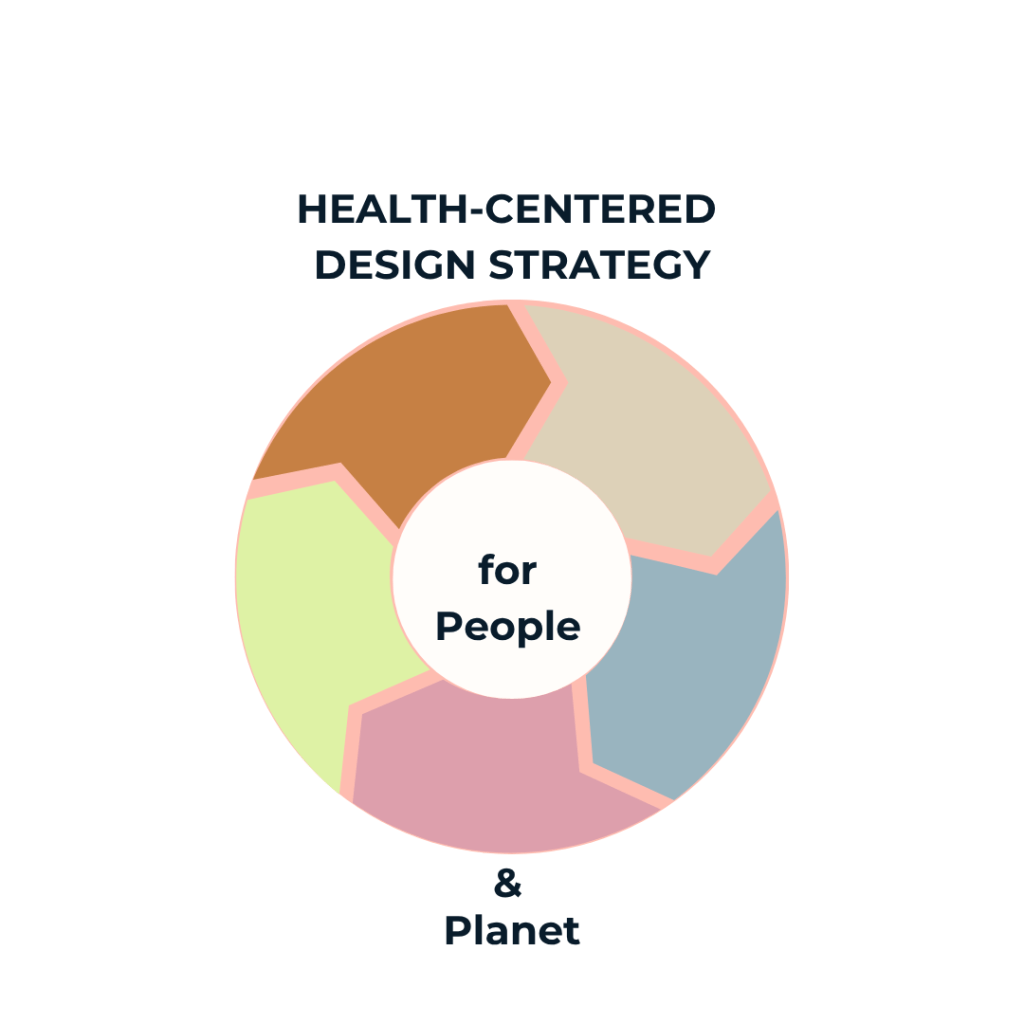
Sustainability alone isn’t enough. Doughnut Economics invites us to regenerate—to create buildings that actively restore ecosystems, uplift communities, and build long-term resilience.
What would it mean if every home cleaned the air, collected its own water, and supported its occupants’ mental health?
What if our neighborhoods fostered joy, equity, and climate readiness?
The future is not just less harm—it’s more healing. Let’s design within the doughnut.
 MAYA Material
Leave a comment